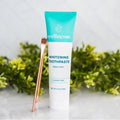



Wondering if whitening toothpastes work for daily use? Yes, these toothpastes help remove surface stains from coffee, tea, and wine over time with regular use.
What whitening toothpaste will not do is alter the natural color of your teeth or bleach deeper intrinsic stains. That distinction shapes how you should use these formulas.
This article explores how whitening toothpaste works and when daily use is safe for tooth enamel. We also explain how selecting good key ingredients preserves oral health, provides cavity protection, and prevents enamel erosion.
Success with your whitening toothpaste involves multiple factors: formulation strength, abrasive ingredients, chemical agents, and oral health baseline health dictate the results. You should expect a gradual whitening effect rather than a dramatic color change.
With a smart regimen, many people use whitening toothpaste daily without causing enamel wear or damage. Here’s how to decide if this option suits your needs before seeking professional treatments or in-office whitening from a dentist.
Is Whitening Toothpaste Safe for Daily Use?
Yes, teeth whitening toothpaste can be safe for daily use, as long as you choose the right formula and use it correctly.
The key is understanding that not all whitening toothpastes are the same. Some are made for occasional, more intensive stain removal, while others are formulated for regular brushing.
For daily use, you want a toothpaste that focuses on gentle polishing, enamel support, and overall oral health.
Whitening toothpaste is often a good fit for people who have:
- Minor surface stains from coffee, tea, wine, or tobacco
- Healthy enamel and low tooth sensitivity
- A preference for gradual whitening rather than dramatic bleaching
- A desire to maintain a brighter smile after professional cleanings or whitening treatments
- An interest in a daily routine that supports both appearance and oral health
That said, some people should be more careful before starting any whitening routine. If you have sensitive teeth, gum recession, thin enamel, untreated cavities, gingivitis, crowns, veneers, or orthodontic appliances, it is wise to ask your dentist which type of whitening toothpaste is appropriate for you.
Products like Wellnesse’s toothpastes contain mild polishing ingredients and enamel-supportive minerals that are generally better suited for everyday use than highly abrasive formulas designed for short-term stain removal.
 |
 |
|
|
| CHECK PRICE | CHECK PRICE |
|
Key Insight: Whitening toothpaste is not automatically risky for daily use. The right product can be a safe, effective part of your everyday routine when it uses gentle polishing ingredients, supports enamel health, and matches your sensitivity level. |
Strong and Mild Abrasives and Enamel Health
Many whitening toothpastes work by using polishing ingredients to help remove surface stains from the outer layer of the teeth. These stains often come from lifestyle habits, drinking coffee, tea, or red wine, using tobacco, and everyday plaque buildup.
The concern is that some whitening toothpastes use stronger abrasive ingredients or higher levels of polishing agents to create faster stain removal. An abrasive toothpaste is not always the best choice for everyday brushing, especially for people with sensitive teeth, thin enamel, or gum recession.
That’s why we recommend a well-formulated whitening toothpaste that uses mild polishing ingredients to gradually brighten the appearance of teeth without unnecessary enamel wear.
Common polishing ingredients include:
- Silica
- Calcium carbonate
- Hydroxyapatite
These ingredients can be gentle or more abrasive depending on the overall formula. That is why the complete toothpaste formulation matters more than a single ingredient on the label.
One helpful measure is Relative Dentin Abrasivity (RDA). RDA gives a general idea of how abrasive a toothpaste is. Any toothpaste with an RDA at or below 250 is considered safe for daily use by the ADA, and a lower-to-moderate RDA is a reasonable choice if you have sensitivity or enamel concerns.
Sensitivity and Gum Irritation
Whitening toothpaste does not have to cause sensitivity or gum irritation. These issues are more common when a formula is too abrasive, contains harsh whitening agents, or is used with aggressive brushing.
Stop or reduce use if you notice:
- Lingering sensitivity between brushing sessions
- Pain with hot, cold, or acidic drinks
- Gum redness, soreness, or swelling
- Increased discomfort near the gumline
Technique matters, too. Use a soft-bristled toothbrush and light pressure to avoid unnecessary enamel wear or gum irritation.
If sensitivity continues or gets worse, ask your dentist for guidance. The right whitening toothpaste should help brighten your smile gradually without making your teeth or gums uncomfortable.
Hydrogen Peroxide and Surface Whitening
Some whitening toothpastes use hydrogen peroxide or carbamide peroxide for a mild bleaching effect. These ingredients can support whitening, but they may also increase sensitivity for some people, especially with daily use. Avoid peroxide-based products if you have sensitive teeth.
Wellnesse whitening toothpaste does not use hydrogen peroxide. Instead, it is designed to polish away surface stains while supporting enamel with hydroxyapatite.
Different whitening ingredients work in distinct ways, which affects their suitability for daily use.
|
Ingredient |
How It Works |
Sensitivity Risk |
|
Hydroxyapatite |
Remineralizes enamel while gentle polishing lifts stains |
Very low |
|
Baking Soda/Silica |
Physical polishing removes surface stains |
Low when properly formulated |
|
Hydrogen Peroxide |
Chemical bleaching of surface and subsurface stains |
Moderate to high |
Tips for Using Whitening Toothpaste With Care

Good technique helps whitening toothpaste work effectively while keeping your teeth and gums comfortable. For the best daily-use experience:
- Follow the product directions for frequency and brushing time
- Use a soft-bristled toothbrush
- Brush with light pressure instead of scrubbing
- Avoid using multiple whitening products at the same time
- Watch for lingering sensitivity, gum irritation, or discomfort
Remember that whitening toothpaste works gradually by lifting surface stains. You may notice a brighter appearance with consistent use, but results usually build over time rather than overnight.
If sensitivity develops, reduce use or switch to a gentler formula. If pain, swelling, or gum irritation continues, check with your dentist to rule out underlying issues.
Discoloration can also result from certain medications or other health factors, which is why consulting with a dental professional is important.
|
Warning/Important: Using multiple whitening products (strips, toothpaste, mouthwash) can compound sensitivity and enamel wear. Stick to one method and monitor for irritation. |
A Safer Daily Whitening Routine With Wellnesse
So, does whitening toothpaste work for daily use? Yes, when you choose a formula made for everyday brushing. The right toothpaste can help lift surface stains gradually while preventing enamel damage.
Wellnesse whitening toothpaste fits this daily-use approach by focusing on gentle polishing and enamel support instead of hydrogen peroxide. Its formula uses micro-hydroxyapatite, a mineral naturally found in teeth, to support remineralization while helping maintain a cleaner, brighter-looking smile.
For best results, use it consistently morning and night with a soft-bristled toothbrush and gentle pressure. Whitening toothpaste works best as a steady routine, not an aggressive quick fix.
Try Wellnesse oral care for a gentler way to clean your teeth today.


