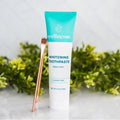



Picking a toothpaste used to feel straightforward. Now the aisle offers fluoride products, non-fluoridated options, mineral-restoring formulas, and a compound you may not have heard of five years ago: hydroxyapatite.
The fluoride vs hydroxyapatite debate often comes up, and for good reason. Both target tooth enamel health, but they work in different ways.
This article walks through what each component is, how it supports human teeth, and who each choice suits best for overall dental care.
Consider this your calm guide to maintaining good oral hygiene through a choice that does not need to be complicated.
What Is Hydroxyapatite Toothpaste?
Hydroxyapatite is the naturally occurring mineral that makes up almost 97% of tooth enamel and about 70% of dentin, the layer just beneath the surface. That is not a marketing claim; it’s a foundational dental anatomy for understanding tooth structure.
Because micro-hydroxyapatite mirrors the biological composition of teeth, it acts as a biocompatible ingredient. The tooth surface recognizes it as the same mineral found inside your mouth.
This makes hydroxyapatite toothpaste an effective fluoride-free option designed to support enamel strength through a mechanism rooted in biology. You may see the term 'micro-hydroxyapatite' on labels.
This refers to particle size rather than a separate compound. A hydroxyapatite toothpaste features particles, discussed for their potential to bond with enamel micro-pores and aid enamel remineralization.
Micro-hydroxyapatite is an active form used in Wellnesse formulas that delivers enamel support at a well-studied scale. It’s preferred by families who want a non-toxic, natural alternative without a confusing label.
In everyday practice, brushing with this paste may offer a few benefits for healthier teeth:
- Enamel surface support after acid exposure from foods and drinks
- A polished tooth surface develops over time with consistent brushing
- A gentler brushing experience suited for people who deal with tooth sensitivity
- A short, recognizable ingredient list
Now, let us define the conventional side of this discussion: standard fluoride toothpaste.
 |
 |
 |
|
|
|
| CHECK PRICE | CHECK PRICE | CHECK PRICE |
|
Warning/Important: There is no universal answer. Whether hydroxyapatite can fully replace fluoride depends entirely on individual cavity history, risk level, and brushing consistency. A personal dental consultation is your most reliable guide for this switch. |
What Is Fluoride Toothpaste?
A standard fluoride toothpaste has been the backbone of mass-market oral care for decades. It is the ingredient dental professionals have used for a long time for cavity prevention, and it appears in the majority of pastes on store shelves, often in forms like stannous fluoride.
Here is how it works: when acid attacks from food or oral bacteria weaken enamel and alter the oral microbiome, fluoride helps the existing mineral structure become resistant to future acid damage.
Instead of depositing fresh calcium phosphate onto the surface, fluoride ions convert present minerals into a harder form called acid-resistant fluorapatite, a protective mineral layer that holds up better against tooth decay over time.
This mechanism is the foundation of its anti-cavity track record and why it remains the customary recommendation in traditional dental care routines.
Fluoride vs Hydroxyapatite: The Main Difference
The sections above explain how each ingredient works individually. The practical difference is in what they leave behind: hydroxyapatite deposits new mineral material onto the tooth surface, while fluoride transforms existing minerals into a harder, more acid-resistant form. Both qualify as remineralizing, just from different angles.
|
Feature |
Hydroxyapatite Toothpaste |
Fluoride Toothpaste |
|---|---|---|
|
Sensitivity Support |
Helps reduce tooth sensitivity |
Typically not marketed for sensitivity |
|
Family-Use Considerations |
Safe for all ages; no ingestion concerns with standard use |
Age-appropriate use recommended |
|
Ingredient-Conscious Appeal |
High; minimalist label, recognizable mineral |
Moderate; known but scrutinized by some shoppers |
|
Best-Fit Shopper |
Fluoride-free seekers, label-readers, switchers |
Conventional-routine users |
The next section looks at what happens during brushing when either ingredient meets your enamel.
How Hydroxyapatite and Fluoride Support Enamel Health
Teeth face a challenge every day from acid attacks. Acids from coffee, citrus, fermented foods, and oral bacteria strip minerals from the enamel surface, a process called demineralization, leading to tooth decay.
Both remineralizing toothpaste options work to counteract that process. They take different routes to reach that goal for healthier teeth.
Here is what happens when either ingredient reaches your teeth:
How Micro-Hydroxyapatite Helps Remineralize Teeth
Micro-hydroxyapatite particles form a protective layer that helps prevent demineralization, plaque buildup, and sensitivity.
That is the biomimetic advantage. Because micro-hydroxyapatite represents a naturally occurring mineral composition of enamel, the interaction feels intuitive to both the tooth surface and the ingredient-conscious shopper reading the label.
Hydroxyapatite works through a mineralizing principle at a scale supported by years of clinical research. For the person brushing, this translates to a few outcomes worth noting:
- A smooth tooth texture that builds with continued use
- Support for tooth sensitivity during brushing
- A regimen that feels productive without any sharp sensation
How Fluoride Helps with Cavity Prevention
Where hydroxyapatite adds new minerals, fluoride modifies what is already there. It integrates into the enamel remineralization cycle and converts weakened minerals into fluorapatite, which resists acid more effectively than the original structure.
This conversion process is the reason fluoride toothpaste has a long track record of fewer cavities in clinical studies. For users whose primary concern is cavity defense, fluoride remains an approachable choice aligned with traditional dental recommendations.
Is Hydroxyapatite Toothpaste Safe to Use as a Replacement?
For many households, hydroxyapatite toothpaste works as a fluoride-free option, and that statement depends on individual factors. Some wonder: Is a fluoride toothpaste safe for everyone, or does a fluoride-free toothpaste fit better? No single answer fits every mouth or family.
Here are the key considerations worth thinking through before making a switch:
- Personal cavity history, higher risk markers, and current cavity risk level
- Sensitivity concerns and texture preferences during brushing
- Household ingredient philosophy, such as avoiding dental fluorosis or checking if your drinking water is fluoridated
- Age of the user: children and adults have different needs and risk profiles
- Guidance from a dentist or oral health professional familiar with your specific history
Some consumers also ask whether fluoride and hydroxyapatite can be used together; alternating products, for example. That is a dentist-guided conversation rather than a blanket recommendation either way.
How to Choose the Right Toothpaste for Your Family

There is no single best answer here; just the ideal answer for your household. A few starting points make the decision easier. Consider which scenario fits your situation:
- Enamel-focused routine: hydroxyapatite toothpaste is a strong fit; ideal for ingredient-conscious adults and families ready to move away from commercial oral care.
- Cavity prevention as the top priority: Fluoride toothpaste remains a solid choice for anyone who prefers the conventional route, especially if you've had cavities before or your dentist has flagged you as higher risk.
A 2019 Cochrane review of 96 trials concluded that fluoride toothpaste at 1,000 ppm or above reduces new decay compared with fluoride-free toothpaste.
- Brushing with kids: Mild flavors, clear directions, and non-toxic formulas matter most. Options without fluoride remove ingestion concerns for young children who are still learning to spit on their own.
- Switching from mainstream toothpaste: Prioritize a formula that feels easy to maintain. A smooth transition that lasts beats a dramatic switch that fades within two weeks.
Wellnesse offers options across each of these scenarios. The adult line covers various sensory preferences with Whitening, Cinnamint, and Charcoal formulas.
The Strawberry toothpaste makes brushing a little more cooperative for younger children to establish good oral hygiene early. For those focused on tooth sensitivity or enamel repair, the 10% Micro-Hydroxyapatite Enamel Serum works as a concentrated add-on alongside daily consistent brushing. This serum offers a step up from standard fluoride toothpaste without overhauling the routine.
Looking to build out a fuller regimen without adding complexity? The Copper Tongue Scraper and Mint Oral Probiotics are simple additions that round out what is working.
Whichever direction feels appropriate, the goal is the same: a regimen that is easy, beneficial, and worth keeping.
Improve Your Dental Care With Wellnesse
The comparison of hydroxyapatite toothpaste vs fluoride comes down to this: both ingredients support a healthy smile, and they differ in mechanism, ingredient philosophy, and the shopper they suit best.
While micro-hydroxyapatite builds a protective layer onto the tooth surface to create stronger enamel, fluoride works by making tooth enamel more acid-resistant.
The optimal toothpaste is one you'll use consistently, that's safe for your family and kids, and that aligns with your ingredient preferences.
Wellnesse offers a modern, ingredient-conscious path to a cleaner oral care routine without unnecessary complexity.
If you are considering a fluoride-free switch for yourself or your family, exploring the micro-hydroxyapatite toothpaste options is a low-pressure starting point. Browse by flavor, by age, or by concern, and build from there at your own pace for lasting dental health.


