


You smile at yourself in the mirror and notice chalky white patches on your teeth. Maybe they are new. Maybe they have been there for as long as you can remember. If your first thought is, “Why are there white spots on my teeth?” you are not alone.
White spots are common, and they can have several causes. Knowing what caused them can help you choose the right next step.
This guide explains what causes white spots, what you can do at home, and which everyday habits support your oral health and may help prevent new ones.
What are White Spots on Teeth?
White spots are chalky, cloudy, or lighter areas on the surface of a tooth. They may look like small dots, patches, or streaks.
They form when a section of enamel, the hard outer layer of the tooth, has a different mineral content or structure from the enamel around it. Because enamel is relatively thin, even small changes can be easy to see.
White spots can develop for several reasons, so their appearance alone may not tell you what caused them. Identifying the cause is the first step toward deciding what may help.
Common Causes of White Spots on Teeth
White spots can develop for several reasons. Some begin when minerals leave the enamel. Others form because the enamel develops differently, or because something affects the teeth while they are still developing.
The sections below cover the most common causes, starting with early mineral loss, which may improve with consistent home care when caught early.
Early Mineral Loss Near Plaque
Plaque-related mineral loss is one common cause of white spots. When plaque buildup stays on the teeth, bacteria feed on sugars and produce acid. That acid removes minerals from the enamel, a process called demineralization.
The result can be a dull, chalky spot and an early sign of tooth decay. Cleveland Clinic notes that white flecks on your teeth can mean cavities are forming.
When mineral loss is caught early, consistent home care may help protect the enamel and prevent the area from getting worse.
Braces and Orthodontic Appliances
White spots can develop during orthodontic treatment and become easier to see once the brackets come off. They often develop where the brackets were attached.
Brackets and wires make it harder to clean around each tooth, so plaque can linger and pull minerals from the enamel. These areas are often called orthodontic white spot lesions.
A systematic review and network meta-analysis of 70 randomized trials and 4,634 participants looked at ways to prevent and manage white spot lesions associated with fixed orthodontic treatment.
If you have braces, careful brushing and flossing are especially important. Our guide on using whitening toothpaste with braces includes more tips.
Too Much Fluoride During Childhood
Cleveland Clinic explains that high fluoride exposure during childhood can cause white spots, a condition called dental fluorosis.
Fluorosis develops while permanent teeth are still forming beneath the gums. The spots may look like white flecks, lines, or patches.
If your child uses fluoride toothpaste, the American Dental Association recommends a drop about the size of a grain of rice for children under 3 and a pea-sized amount for ages 3 to 6. Supervise brushing and teach them to spit, not swallow.
If you prefer fluoride-free oral care for your family, our strawberry and vanilla berry toothpastes contain hydroxyapatite instead of fluoride.
Enamel That Did Not Fully Develop
Some white spots are visible as soon as a tooth comes in. They can occur when the enamel does not develop normally, leaving white, yellow, or brown patches.
The American Academy of Pediatric Dentistry describes one common version, molar-incisor hypomineralization. Affected teeth can show white, yellow, or brown opacities and may be more prone to sensitivity and decay.
Because these spots are part of the tooth’s structure, a dentist should evaluate them.
Other Possible Causes
- Dry spots after whitening: Whitening gels can temporarily dry teeth out, making some areas look whiter than others. The difference usually fades within 24 to 48 hours as the teeth rehydrate.
- Injury to a baby tooth or developing tooth: A bump during childhood can affect how enamel forms.
- Certain medications or health conditions: Some medications and health conditions can affect tooth color. A dentist can help determine whether one of these may be contributing to the change.
Which Type of White Spot Do You Have?
This table compares four common types of white spots and whether home care can help.
|
Cause |
What it often looks like |
Can home care help? |
|
Early mineral loss (plaque acids) |
Chalky, dull patches near the gumline or around braces |
Often yes, when caught early |
|
Orthodontic white spots |
Chalky areas, often around where brackets sat |
Can help improve appearance; ask your orthodontist |
|
Fluorosis |
White flecks, spots, or lines |
Limited; a dentist can discuss cosmetic options |
|
Developmental defects |
White, yellow, or brown patches (for example, molar-incisor hypomineralization on molars and front teeth) |
Supports daily care; a dentist should evaluate |
The appearance of a white spot can offer clues, but it does not always reveal the cause. If you are unsure, a dental exam can help confirm what is happening and what to do next.
How to Get Rid of White Spots on Teeth
The right approach depends on what caused the spot. Start by finding the cause, then focus on daily habits that support your enamel.
Step 1: Start With a Dental Check
Ask your dentist to look at the spots, especially if they are new, spreading, or on a child's teeth. A dentist can help determine whether they are related to early mineral loss, fluorosis, enamel development, or another cause.
Step 2: Support Remineralization at Home
For spots caused by early mineral loss, the goal is to support the process of remineralization, in which minerals return to the enamel.
Saliva does much of this work naturally, but you can support it with a few everyday habits:
- Brush twice a day with a gentle, remineralizing toothpaste. Spit, but do not rinse, so the toothpaste remains on your teeth longer.
- Floss at night to clear away food debris and plaque before bed. This helps prevent food particles and plaque from lingering between your teeth for the 7–10 hours you’re asleep.
- Rinse with water after eating or drinking something sugary or acidic.
- Limit frequent snacking and sipping throughout the day.
- Chew sugar-free gum after meals to help stimulate saliva.
Learn more about how remineralization works in our guide to tooth remineralization.
Step 3: Use Hydroxyapatite Products
Hydroxyapatite is the mineral tooth enamel is built from. Strong, healthy enamel helps protect your teeth and reduce the risk of developing white spots. Hydroxyapatite works to remineralize enamel, fill in microscopic cracks and crevices, and support overall oral health, giving your teeth an extra layer of protection with every brush.
Choose a hydroxyapatite-based toothpaste to give your enamel the targeted support it needs.
We offer a few options:
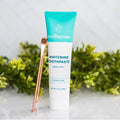
- Whitening Toothpaste: A fluoride-free daily toothpaste with micro-hydroxyapatite.
- Strawberry Toothpaste: A fluoride-free option for children.
- Hydroxyapatite Varnish: A concentrated formula with 10% micro-hydroxyapatite. Apply it once a day, leave it on for 30 minutes, and then rinse gently.
Learn more about why micro-hydroxyapatite is a popular choice for natural oral care.
Set Realistic Expectations
The research suggests that daily care may improve the appearance of some white spots, but it cannot always reverse them. In the 70-trial review of orthodontic white spots mentioned above, several interventions, including self-assembling peptides, CPP-ACP pastes, and xylitol varnish, made the spots look less noticeable.
The authors also reported that none of the interventions significantly reduced lesion size compared with the control group.
In practical terms, consistent home care can support your enamel, make some spots less noticeable, and help protect against new ones. But a spot that has been there for years may not disappear completely with toothpaste alone.
That means you may need both a daily routine and professional treatment if you want to change the spot’s appearance more significantly.
Will Whitening Help With White Spots?
Whitening may help some white spots blend in, but it will not remove the spot itself. It can brighten the surrounding tooth, although it generally works best on yellow stains.
Right after whitening, white spots may look brighter for a day or two while the teeth rehydrate. Because results vary by cause, ask your dentist before whitening.
If you are trying to make white spots less noticeable, choose a gentle formula and avoid harsh scrubs. Our guide on whether whitening toothpaste damages enamel covers what to look for on the label.
How to Prevent New White Spots
You cannot prevent every type of white spot, especially those related to tooth development. But you can lower the risk of plaque-related mineral loss with a few consistent habits.
Brush and Floss Consistently
Brush twice a day for two minutes. Pay extra attention to the gumline and around any braces. Floss once a day to clear plaque from between teeth.
Cut Back on Constant Sugar and Acid
Bacteria turn sugar into acid. The American Dental Association notes that tooth decay starts when bacteria in plaque produce acids after you eat or drink sugars, and those acids attack the enamel.
You do not need to avoid treats. Enjoy them with a meal instead of snacking on sugary or acidic foods throughout the day, and rinse with water afterward.
Keep the Mouth in Balance
Xylitol may help reduce cavity-causing bacteria, and oral probiotics can help maintain a healthy balance of bacteria in the mouth. You can read more about xylitol and the oral microbiome.
If you use oral probiotic mints, follow the product directions. For Wellnesse oral probiotic mints, that means letting one dissolve in your mouth once you’ve eaten and brushed your teeth.
Use a Soft Brush and Replace It Often
A soft brush cleans well without being unnecessarily hard on the enamel. Replace it every three to four months, or sooner if the bristles fray. Our post on when to change your toothbrush explains what signs to look for.
Keep Up With Dental Visits
Regular dental visits can catch early mineral loss before it becomes more difficult to manage. Your dentist can also recommend a cleaning schedule if you have braces or a history of cavities.
Build a Stronger Oral Routine With Wellnesse
White spots do not have one universal fix. Start by identifying the cause, then focus on daily habits that support your enamel. If a spot does not improve or continues to concern you, ask your dentist about treatment options.
For daily oral care, we offer a fluoride-free hydroxyapatite toothpaste and a hydroxyapatite varnish for more concentrated mineral support. Keep brushing and flossing consistently, and use a tongue scraper if it is part of your usual routine.
Explore our oral care collection to find products that fit your routine.


